
How we build · in the order it goes on
Same panels. Different everything else.
Every quote you collect will list the same panel brands and the same inverters. What separates a twenty-year plant from an eight-year one is everything around them — and that never fits on a WhatsApp rate list. Here is ours, part by part.
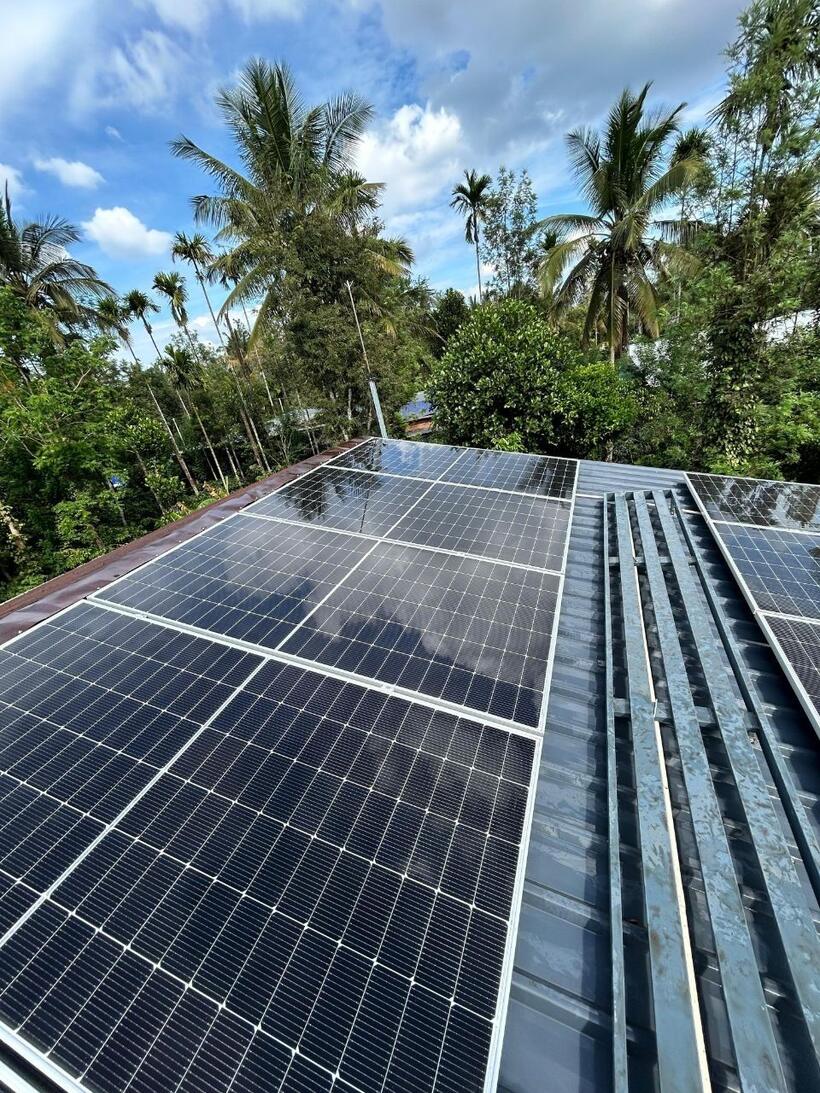
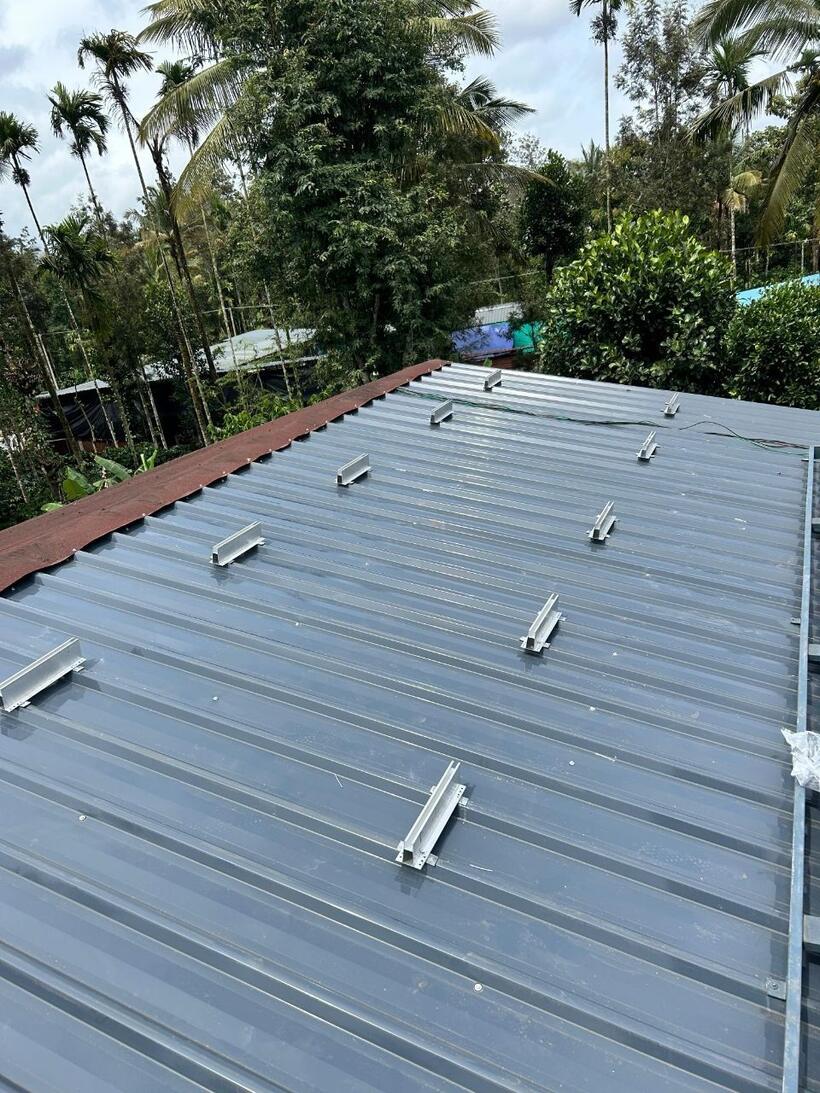
Welds ground, primed and painted before a single panel arrives · drag the handle
TATA GI tube · stainless fasteners · J-bolts + clamps
A frame that outlives the loan.
Heavy TATA GI structural tube, not the thin GP tube common in the market. Every weld ground, primed and painted. Every nut, bolt and washer stainless steel — one rusted fastener ruins a twenty-year system.
This is where most of our price difference lives, and it's worth saying plainly: GI costs more per kilo than GP, and we use more kilos. Fifteen kilos of GI against ten of GP isn't fifty percent more — it's pricier steel, and half as much again of it.
- J-bolts through the panel's own mounting slots. They hold the panel on their own; we add mid and end clamps as well. Most installers use clamps alone.
- 5 mm tolerance. The welded frame has to line up that closely for the J-bolts to meet the slots. Unforgiving, and the reason it is rarely done.
- Sheet roofs, two ways. A good-angle sheet takes aluminium rails riveted straight to it, sealed with rubber sheet. A steep sheet or a tiled roof on purlins takes a welded GI frame on top — a flat roof build without the concrete.
- Both sheet methods cost the same. So it is a choice, not a saving. Flush-mounted panels run warmer and give up some rear-side gain; an elevated frame breathes better.
The steel stamps its own proof — ask to see the TATA marking on delivery day.
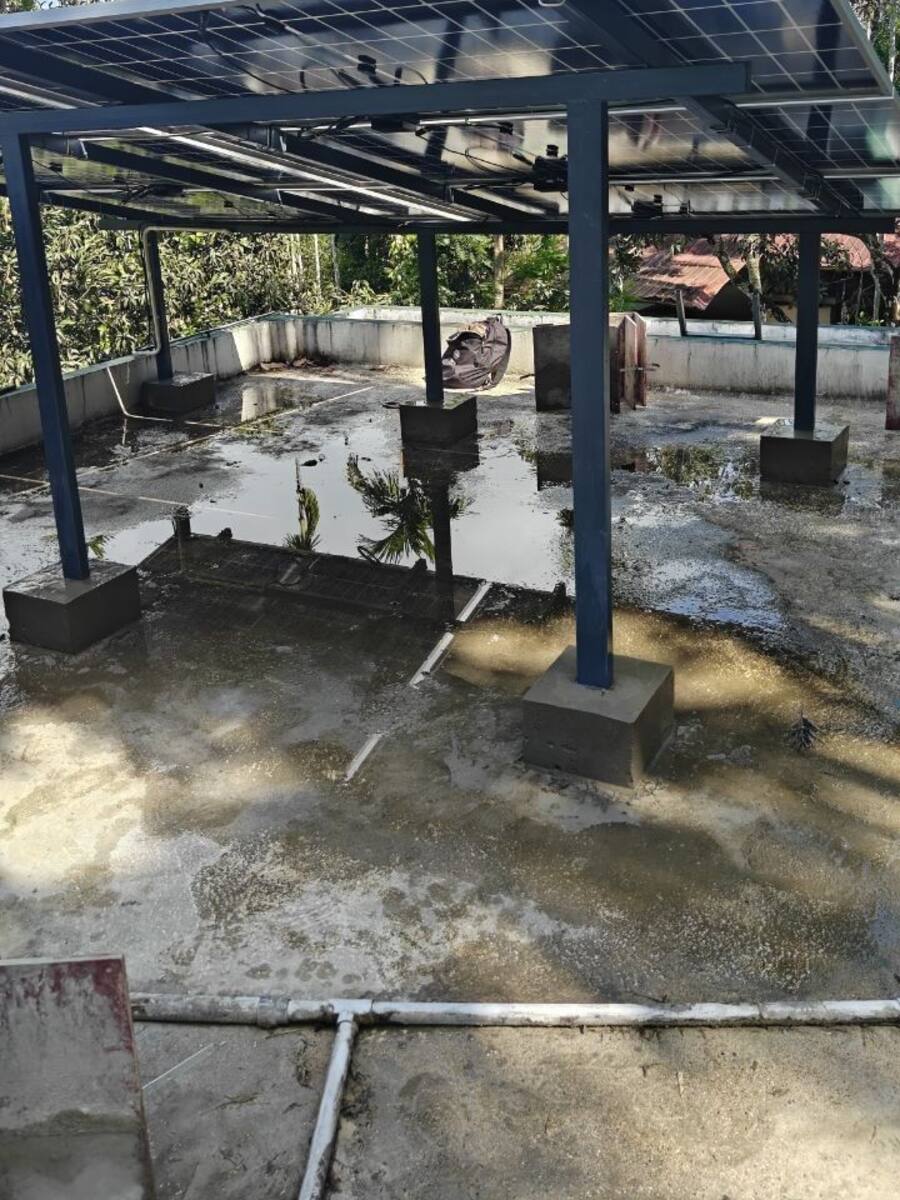 Cast over waterproofing
Concrete under every leg · no holes in your roof
Why we carry cement up to your roof.
Carrying cement, sand and aggregate up from the ground and casting a footing under every leg is our costliest, slowest step. We would happily skip it. We don't, for two reasons.
- Your panels are glass on both faces. A frame that is only anchor-bolted flexes in wind, and flexing bends glass — seeding micro-cracks that quietly cut output for years. No warranty covers it; it counts as physical damage. Concrete mass keeps the structure still.
- Every anchor bolt is a hole in your roof. Every hole is one bad monsoon from being a leak. Our footings are cast over industrial-grade waterproofing instead — nothing is drilled through the slab.
Almost no one else pours concrete legs. Now you know what they save — and what you would risk.
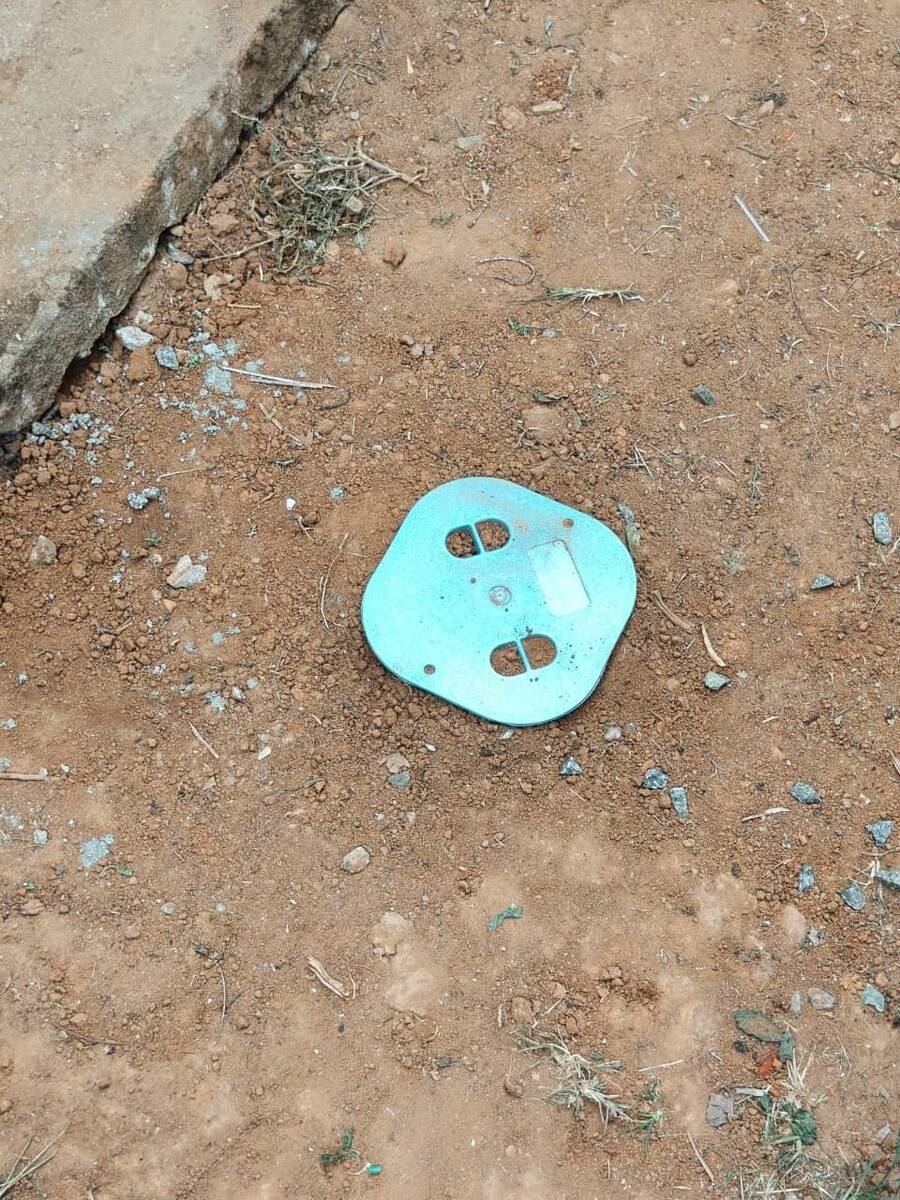 GI electrode · 2.5 m
3 pits · 2.5 m deep · auger-dug · premium compound
Buried where you'll never see it.
Three pits per site, auger-dug to 2.5 metres, with full-length thick GI electrodes and premium conductive compound. It's slow, costly, and buried where you'll never see it — which is exactly why cheap quotes skip it, and exactly where lightning decides whether your system survives.
Others dig three pits too — thinner, and shallower. The difference only shows in a storm.
Comparing quotes? Ask one question: "How deep — and how thick — is your earthing?"
Why depth decides it
Lightning needs somewhere to go.
An electrode only works through the soil touching it. Near the surface, Wayanad's soil dries out for months at a stretch and its resistance climbs exactly when the storms arrive. Deeper soil stays damp — so a 2.5 metre electrode is still conducting in March, when a 1 metre one has quietly stopped being much use.
Both installations look identical from your terrace. Both have three chambers with lids. You will never find out which one you have until the night it matters.
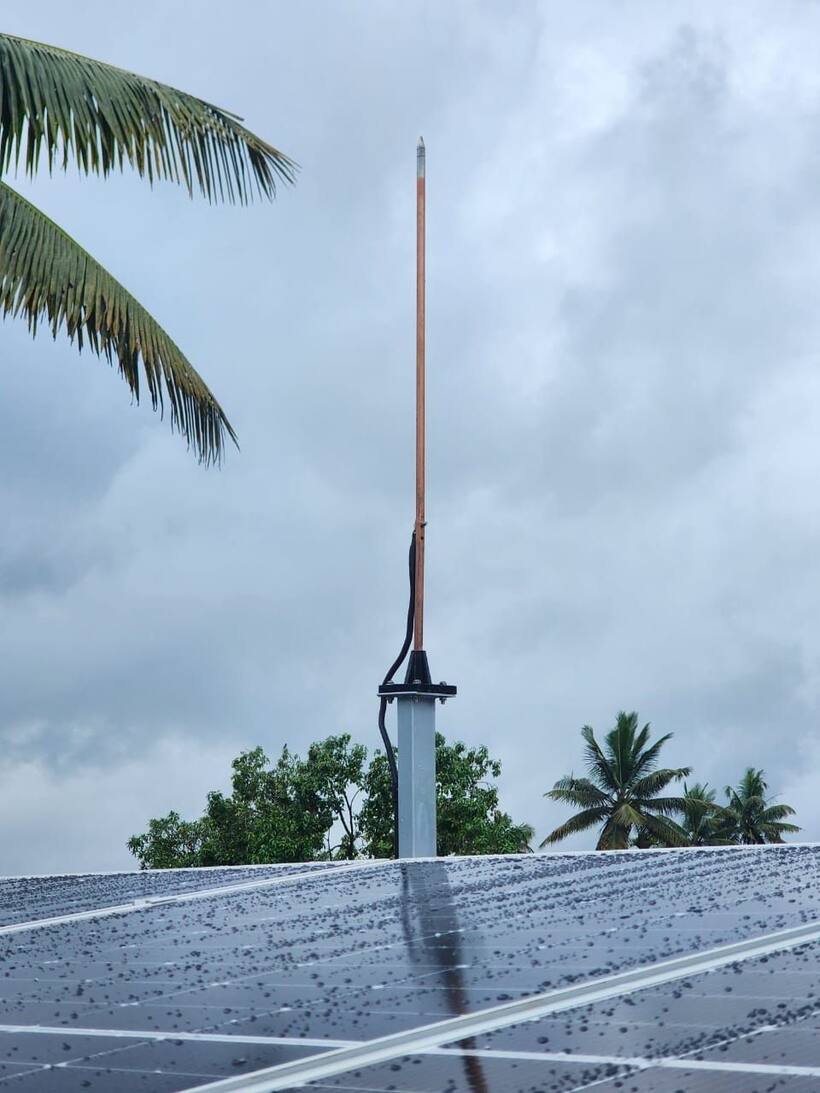
Mersen or Citel surge protection · ABB, Mersen or Schneider breakers · lightning arrester
Built for Wayanad lightning.
Wayanad catches some of the fiercest lightning in Kerala, and one box stands between a surge and your inverter. The surge protector — Mersen or Citel, depending on the distribution box — is built to sacrifice itself to absorb the hit. We'd rather replace a small part than your inverter.
The breakers are ABB, Mersen or Schneider — the brands engineers specify when failure isn't an option. Above the panels, a lightning arrester takes the strike; below the soil, the earthing carries it away.
This is exactly where cheap quotes quietly save their money. We don't.
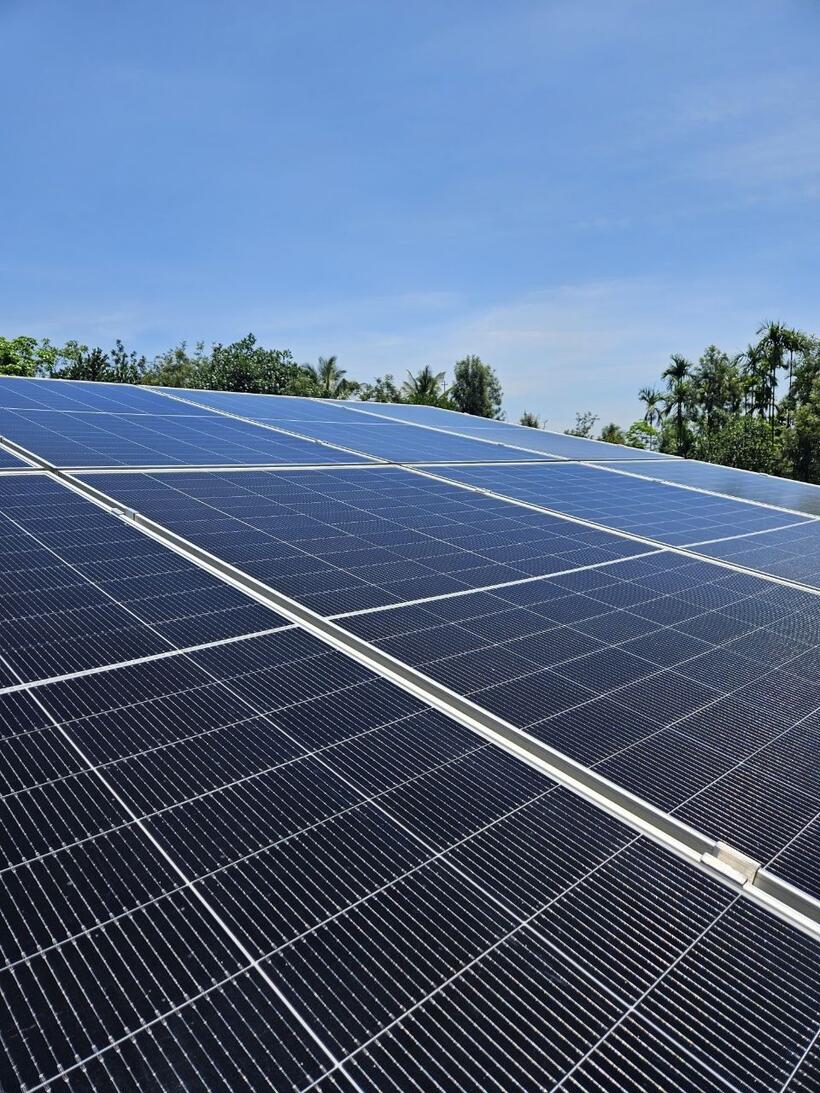
Waaree TOPCon · 560 W minimum · glass on both faces
Panels that age slowly.
- Waaree makes the cell and the panel. Most brands only assemble. If stock runs short we use Adani TOPCon, the other Indian maker that does both.
- TOPCon, not PERC. More power from the same roof, better output in cloudy light — which matters in Wayanad more than anywhere in Kerala — and slower ageing.
- 560 W minimum. Stock often runs higher, at the same price.
- Product warranty
- 12 years
- Performance warranty
- 30 years
- Year-30 output floor
- 87.4%
One honest note that applies to nearly every brand: warranties hold only when the maker's guidelines are followed. A faulty installation voids the claim, and so can dirt left sitting in one spot. The structure work above isn't an extra — it keeps your warranty alive.
- String inverter
- GoodWe · SMA · Sungrow
- Shaded roofs
- SolarEdge with optimisers
- Micro-inverters
- Enphase · Hoymiles
- First response on a fault
- Us, locally
- Checked
- Every morning
GoodWe, SMA or Sungrow · SolarEdge where there's shade
The working heart.
The one part running flat-out every daylight hour. A GoodWe, SMA or Sungrow string inverter on most roofs; SolarEdge with an optimiser on every panel where there's shade; Enphase or Hoymiles micro-inverters where they suit the layout better. The warranty is the maker's — typically 8 years — and the exact figure is printed on your quote.
What matters more than the badge is who stands with you when it faults: we find it, we deal with the maker's service team, you call us and we take it from there.
- Shade on the roof? SolarEdge optimisers on every panel recover most of what passing shadows cost. The site survey tells us which roof you have.
- Which brand? Depends on availability and the roof. All of them report to an app in your pocket and to our screen every morning.
Astral rigid conduit · weather-grade flex · Stäubli connectors
The small parts that decide year fifteen.
Rigid runs go in Astral conduit; flexible sections use separate weather-grade conduit built to sit in the sun, not the ordinary kind that turns brittle in two monsoons. Panel connections are Stäubli — the Swiss originals, not the lookalikes that account for most connector failures.
None of this shows in a photograph of a finished roof. All of it shows in year fifteen.
If a part isn't available in Wayanad, we go to another district. Not in Kerala? Chennai or Bangalore. Not in South India? It comes from Delhi. Usually for something small — something nobody will ever see once the work is finished.
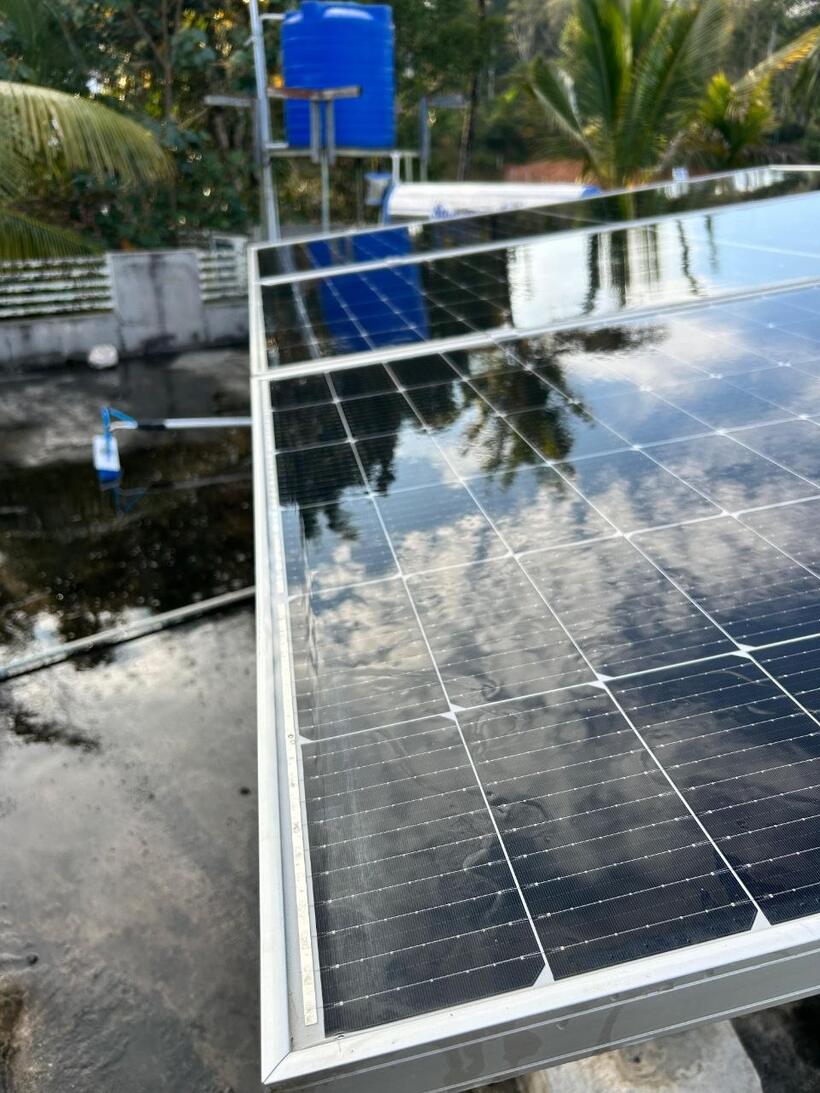
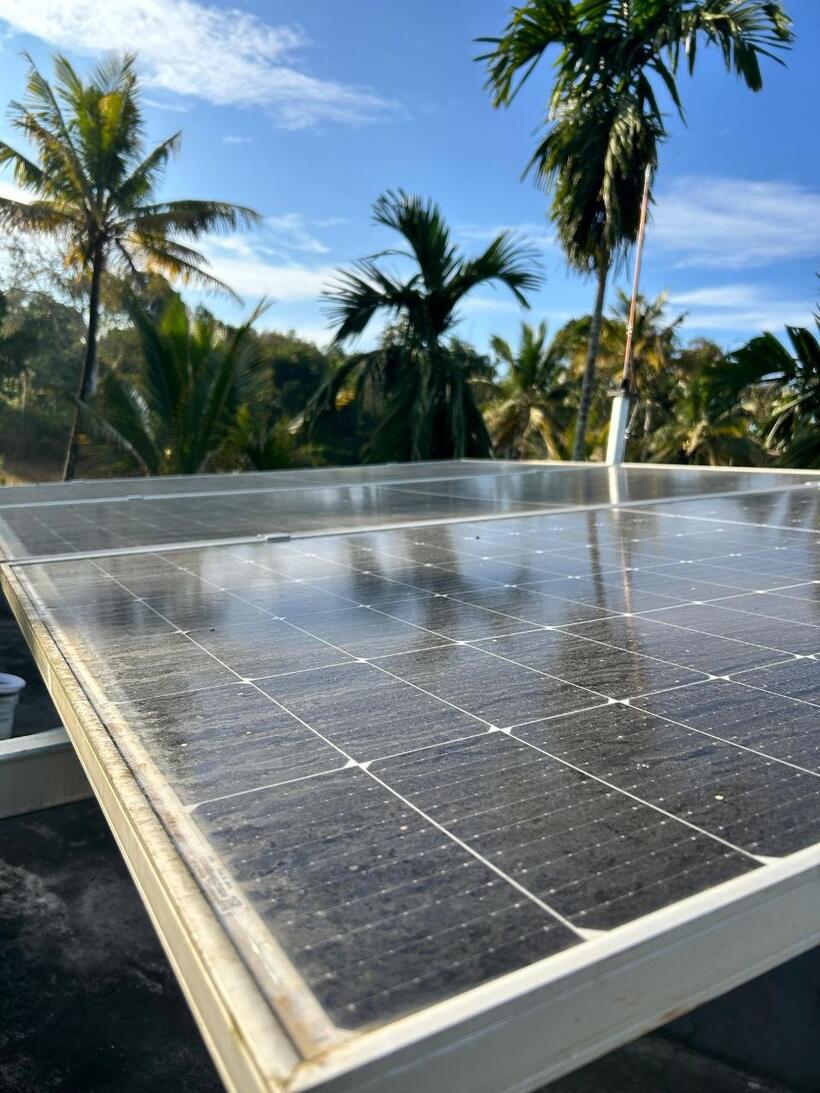
The same panels, one service visit apart · drag the handle
Watched every morning · cleaned when it matters
The work doesn't end at commissioning.
Dirt is not cosmetic. A patch left sitting on one spot drags output down and can void a panel warranty — and from the ground, you'd never know. Every system we install reports to our office each morning, so a roof that starts underperforming is a roof we already know about.
Most of the systems in this district were installed, photographed, and never looked at again. Ours are looked at tomorrow morning. And the morning after.
Ask everyone these six.
1How deep is your earthing?
Three pits, 2.5 m deep, auger-dug, thick electrodes, premium compound.
2GP pipe or GI? Are the welds primed and painted?
TATA GI tube, every weld ground, primed and painted.
3Does the frame move in the wind?
No. Heavy TATA GI on concrete footings, J-bolted and clamped. A frame that moves bends the glass; micro-cracks follow, output falls year after year, and physical damage is never covered by a panel warranty.
4Are the nuts and bolts stainless steel?
All of them. One rusted fastener ruins a twenty-year system.
5Who checks my generation tomorrow morning?
We do. Every site, every day, from our office in Wayanad.
6What's the full timeline — in writing?
In writing, on every proposal we give — step by step, with the subsidy window stated conservatively.
If every answer matches ours, take the cheaper quote. We'll understand.